
Expert Residential Power Washing Services in Las Vegas, NV
Desert dust, hard water, and relentless sun take a toll on every surface around a Las Vegas home. Driveways gray out faster than concrete in wetter climates. Stucco picks up dust and mildew in shaded corners. Pool decks develop a chalky film from mineral-heavy water. Residential power washing addresses all of it, but only when the method matches the surface. This page covers what residential power washing includes for Las Vegas homes, from driveways and patios to stucco, turf, and solar panels, along with what actually affects pricing and how a proper cleaning process works.
250+ ReviewS
Licensed & Certified
100% Satisfied clients
Serving Since 2022
Professional Residential Power Washing for Las Vegas Homes
If you’re comparing residential power washing in Las Vegas against a generic pressure washing service, the difference usually comes down to judgment. Anyone can point a wand at a driveway. Getting it right on stucco, pavers, epoxy, or turf without causing damage takes an understanding of how each surface responds to pressure, heat, and cleaning solutions.
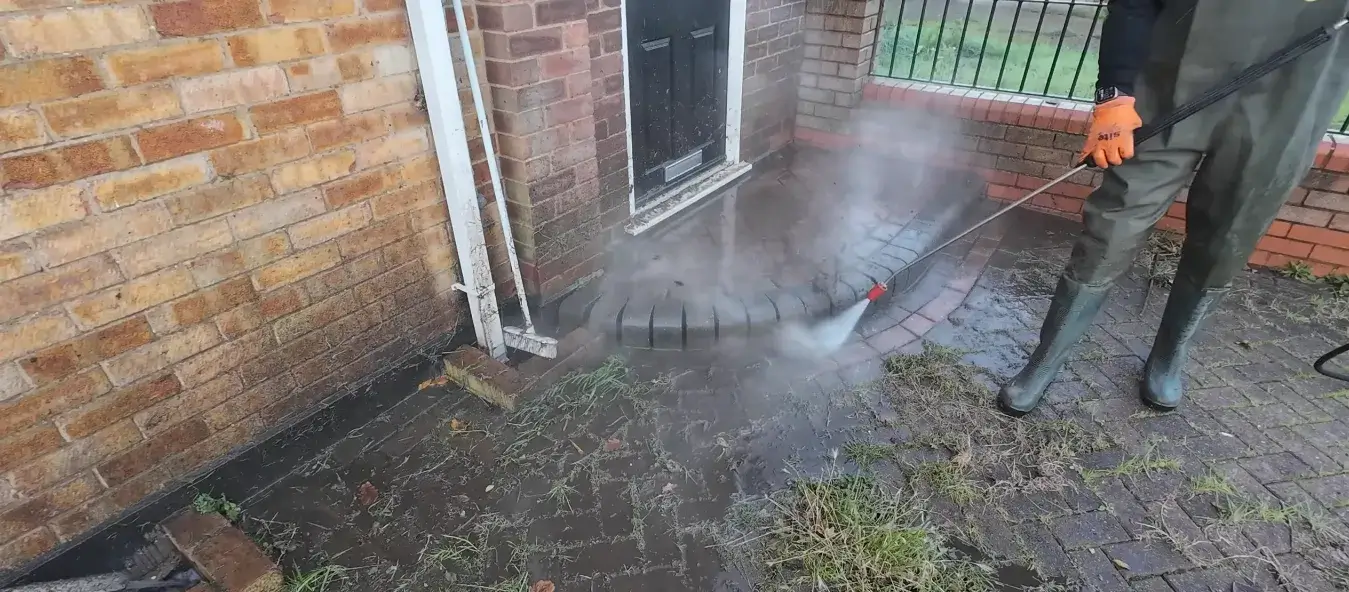
Professional Residential Power Washing in Las Vegas Homes
Residential power washing covers the exterior surfaces around a house that collect dirt, stains, and buildup over time: driveways, walkways, patios, pool decks, house exteriors, garage floors, trash cans, artificial turf, and solar panels. In most cities, these surfaces mainly deal with rain runoff and everyday dirt. In Las Vegas, the challenge is different.
The valley gets very little rainfall, so dust doesn’t wash away on its own. It settles, layer after layer, until a driveway or patio looks noticeably darker than it did a year earlier. Local tap water is also very hard, which means every sprinkler cycle or hose rinse leaves behind a thin mineral film that builds up on concrete, pavers, and pool decks. Add intense summer heat that bakes stains into surfaces and short monsoon storms that bring sudden mud and silt, and residential exteriors here age differently than they would in a milder climate.
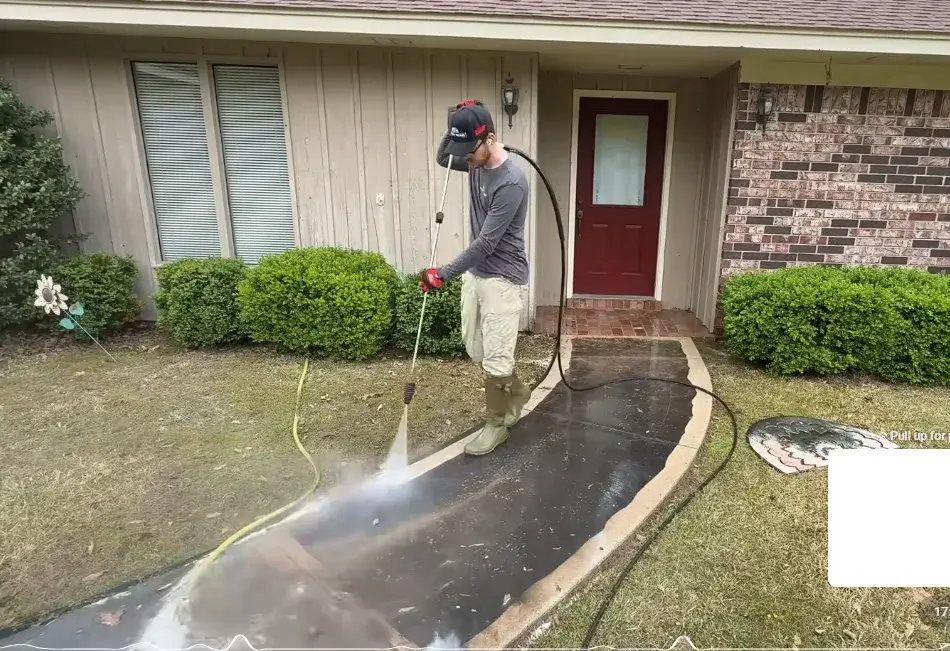
Effective cleaning means matching the approach to the surface rather than defaulting to maximum pressure. A concrete driveway can generally take high pressure and heat. A stucco wall cannot. Treating every surface the same way is the fastest route to damage, not a clean result.
Driveway and Walkway Power Washing
Driveways and walkways see more wear than almost any other surface on a property. Tires track in oil residue, dust settles constantly, and foot traffic grinds dirt into the surface pores over months and years. Because concrete is dense and durable, it can usually handle higher pressure and, when needed, heated water, which makes driveways and walkways one of the more straightforward residential cleaning jobs when done correctly.
Removing Oil Stains, Tire Marks, and Ground-In Dirt
Oil stains form when a vehicle leaks or drips onto concrete over an extended period, and the longer that oil sits, the deeper it soaks into the surface. Fresh stains typically respond well to a degreaser treatment followed by hot water pressure washing. Older stains that have had months or years to set in may lighten significantly without disappearing completely, since oil that has penetrated deep into porous concrete doesn’t always lift out in a single treatment.
Tire marks usually come from the rubber compound transferring onto concrete during turns or parking, and these generally clean up well with standard pressure washing. Ground-in dirt and general grime respond to the same approach. The honest expectation to set going in: most surface staining improves dramatically, but concrete that has absorbed oil for years may need more than one visit, or may retain a faint shadow even after professional cleaning.
Hot Water vs Cold Water for Concrete Driveways
Hot water has a real advantage when oil, grease, or heavy grime is involved, since heat helps break down those substances faster than cold water alone. That’s why hot water pressure washing is common for garage floors, driveways with vehicle stains, and areas with baked-on grime.
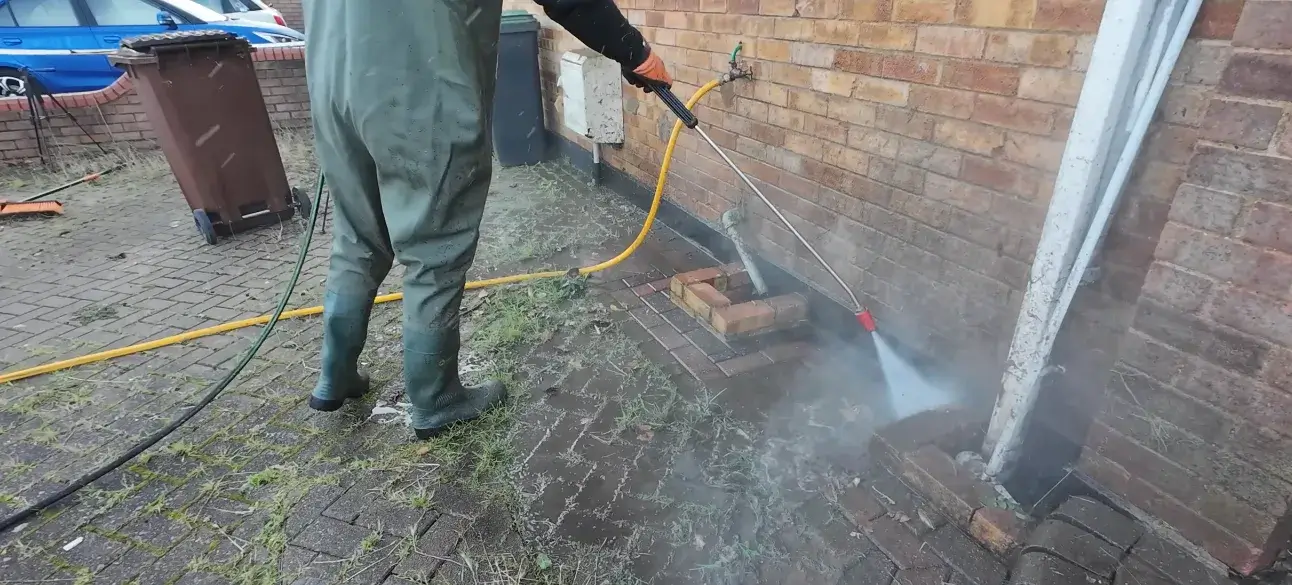
Cold water pressure washing is often sufficient for dust, dirt, light staining, and general seasonal cleaning where no oil or grease is present. Cold water is also gentler on certain surfaces and coatings, so it isn’t accurate to say hot water is always the better choice. The right call depends on what’s actually on the surface, not a fixed rule applied to every driveway.
Patio and Pool Deck Cleaning
Outdoor living spaces get heavy use in Las Vegas, where the climate favors spending time outside for much of the year. Patios and pool decks accumulate a mix of dust, sunscreen residue, pool chemicals, and mineral deposits that differ from what a plain driveway deals with.
Removing Hard Water Stains and Chlorine Buildup from Pool Decks
Pool decks develop a chalky white residue over time from a combination of splashed pool water, evaporation, and the valley’s naturally hard tap water. Chlorine residue and mineral deposits both contribute to this filming, and it tends to build up faster around pool edges and low spots where water sits longest.
Pressure alone can loosen surface dirt, but mineral deposits that have bonded to the concrete or decking material sometimes need a specific cleaning solution formulated for mineral buildup rather than pressure by itself. It’s reasonable to expect a significant visual improvement from professional cleaning, but deeply set mineral staining on older or more porous decking may require more than one pass, or may not fully return to its original color.
Paver Patio Cleaning Without Damaging Joint Sand
Paver patios look different from poured concrete because they’re made of individual units held in place partly by the sand packed between the joints. High pressure aimed directly into those joints can blow out the sand, which loosens the pavers and creates uneven settling over time.
Proper paver cleaning uses controlled pressure and a wider spray angle to lift dirt and staining from the paver surface without disturbing what’s holding the joints together. After cleaning, joint sand sometimes needs to be topped off to keep pavers stable, which is worth asking about if a patio hasn’t had sand replenished in several years.
House Washing and Soft Washing for Stucco and Siding
Stucco is the dominant exterior material on Las Vegas homes, and it behaves very differently under pressure than concrete does.
Why Stucco and Painted Exteriors Need Soft Washing, Not High Pressure
Stucco is a porous, somewhat brittle material. High pressure aimed directly at stucco can crack the surface, force water behind the coating, or strip away texture that took real skill to apply in the first place. Painted siding carries a similar risk, since high pressure can peel or chip paint that’s otherwise in good condition.
Soft washing addresses this by using low pressure combined with a cleaning solution that breaks down dirt, mildew, and organic buildup chemically rather than relying on force. The solution does the work of lifting grime, and a low pressure rinse removes it afterward. This isn’t a universal rule for every exterior in every condition, since surface assessment still matters, but for the vast majority of stucco and painted Las Vegas homes, soft washing is the appropriate starting point rather than standard high-pressure washing.
Removing Mold, Mildew, and Algae from Home Exteriors
Mold, mildew, and algae tend to show up in shaded areas, near irrigation overspray, or anywhere moisture lingers longer than it does on sun-exposed walls. North-facing walls and spots near sprinklers or leaking hose bibs are common trouble spots even in a dry climate like Las Vegas.
A cleaning solution formulated for organic growth, combined with a controlled low-pressure rinse, typically removes visible mold, mildew, and algae from exterior surfaces. It’s worth being upfront that cleaning removes existing growth but doesn’t permanently prevent it from returning, particularly in spots where moisture or shade conditions haven’t changed. Addressing the underlying moisture source, where possible, helps growth come back more slowly.
Garage Floor and Trash Can Cleaning
Degreasing Concrete and Epoxy Garage Floors
Garage floors accumulate oil drips, brake dust, and general vehicle residue over years of regular use. Bare concrete garage floors generally tolerate hot water and moderate to high pressure well, which makes degreasing straightforward in most cases.
Epoxy-coated floors are a different situation. The coating itself can be damaged by excessive heat or pressure, sometimes lifting or discoloring if treated the same way as bare concrete. Cleaning an epoxy floor calls for lower pressure, often cooler water, and a cleaning product suited to sealed surfaces rather than raw concrete. Knowing which type of floor is being cleaned before starting is a basic but important part of doing the job without creating new damage.
Trash Can and Bin Sanitizing
Trash and recycling bins collect food residue, grease, and general odor over time, especially in Las Vegas heat, which accelerates bacterial growth and smell. Exterior cleaning of bins typically involves hot water and a cleaning solution to break down grease and residue on the interior and exterior surfaces, followed by a full rinse.
This service addresses visible grime and reduces odor, but it should be described as cleaning and deodorizing rather than a medical-grade disinfecting claim, since that requires specific products and standards beyond standard exterior cleaning.
Artificial Turf Cleaning and Odor Removal
Artificial turf has become common in Las Vegas backyards, largely because it eliminates the water use that real grass requires in a desert climate. It comes with a different maintenance need, though, particularly around odor.
Removing Dog Urine Smell from Backyard Turf
Real grass and soil break down urine naturally over time. Artificial turf doesn’t have that biological process, so urine residue tends to sit in the turf fibers, the infill material underneath, and sometimes the backing layer itself. Simply rinsing the surface with water often isn’t enough to fully address the odor, since much of it is trapped below the visible surface rather than sitting on top of it.
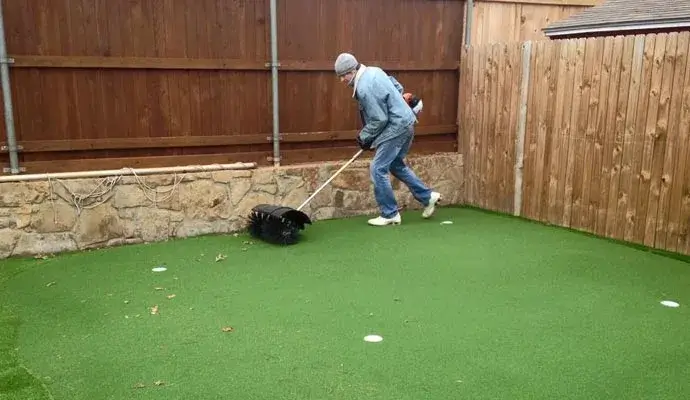
Effective turf odor treatment usually involves a deeper cleaning pass combined with an enzyme or odor-neutralizing solution designed to break down the source of the smell rather than just masking it. In households with multiple pets or turf that hasn’t been treated in a long time, odor may improve substantially without disappearing completely in a single treatment, particularly if infill has absorbed urine over an extended period.
How Often Artificial Turf Needs Deep Cleaning
There isn’t one correct schedule that applies to every yard. A household with one dog and light backyard use will generally need far less frequent turf cleaning than a household with several pets and heavy daily use. Dust accumulation, general foot traffic, and how quickly odor becomes noticeable all factor into how often a deep cleaning makes sense. Many homeowners find a routine based on their own observation of smell and appearance works better than a fixed calendar schedule.
Solar Panel Cleaning for Las Vegas Homes
How Dust Buildup Affects Solar Panel Efficiency
Solar panels rely on direct sunlight reaching the panel surface, and dust accumulation creates a physical barrier between sunlight and the panel itself. In a city with as much airborne dust as Las Vegas, panels can accumulate a noticeable film between cleanings, and that film reduces the amount of light converted into energy, though the exact impact varies by how dusty the surrounding area is, roof angle, and how long it’s been since the last cleaning.
How often cleaning makes sense depends on the specific property. A home near a construction site, unpaved road, or heavy landscaping will generally need more frequent panel cleaning than a home in a cleaner, more sheltered location. Panels should always be cleaned using methods appropriate to the manufacturer’s guidelines and the panel’s surface coating, since some cleaning approaches that work fine on other surfaces aren’t appropriate for solar glass.
Window Washing and Exterior Detailing
Exterior window washing complements power washing by addressing the surfaces that pressure washing isn’t meant to touch directly. Dust, hard water spotting, and general grime build up on exterior glass just as they do on concrete and stucco, and clean windows make a noticeable difference in a home’s overall appearance even when every other surface has already been cleaned.
Window frames and sills often collect the same dust and debris as the surrounding exterior and benefit from attention during a full exterior detailing visit. Pressure washing isn’t an appropriate method for most residential windows, since the force involved risks cracking glass or forcing water past seals, so window cleaning is typically handled as its own careful process rather than an extension of driveway or house washing.
How We Protect Different Surfaces Around Your Home
The core principle behind residential power washing done correctly is simple: different surfaces require different decisions, not the same setting applied everywhere.
Stucco and painted siding call for soft washing and low pressure. Concrete driveways and garage floors can typically handle higher pressure and, where oil or grease is present, heated water. Pavers need controlled pressure that protects the joint sand holding them in place. Pool decks need a balance between lifting mineral deposits and preserving any surface texture or coating. Epoxy floors need reduced heat and pressure compared to bare concrete. Artificial turf needs cleaning and odor treatment rather than blasting. Solar panels need a method suited to their glass surface and manufacturer guidance.
Making these decisions correctly means assessing the actual surface and its condition before starting, adjusting pressure, water temperature, distance, and cleaning solution accordingly, and protecting nearby landscaping, fixtures, and vulnerable areas from overspray and runoff. This is the difference between a service that simply applies pressure everywhere and one that treats each surface as its own situation.
Residential Power Washing Cost in Las Vegas
Residential power washing pricing depends on several factors rather than a single flat rate. Square footage plays a role, since larger driveways, patios, or house exteriors naturally take more time and product. The type and number of surfaces being cleaned matters too, since a driveway-only job is a different scope than a combined driveway, patio, and house wash.
Accessibility affects pricing as well. A driveway with easy access takes less time than one with obstacles, tight side yards, or difficult equipment staging. The level and type of staining matters, since heavy oil buildup or years of mineral deposits require more time and product than routine seasonal dirt. Combining multiple services in one visit, such as a driveway and a house wash together, is often more efficient than scheduling them separately.
What Affects Your Quote
Two homes with similar square footage can receive noticeably different quotes for reasons that aren’t always obvious from the outside. One property might have a stucco exterior needing careful soft washing while the other has vinyl siding that cleans faster. One driveway might have five years of oil buildup while the other has been maintained annually. Landscaping, fencing, and obstacles around the work area also affect how efficiently a job can be completed. Getting an accurate quote generally requires a look at the actual property rather than relying on square footage alone.
Our Residential Power Washing Process
A consistent process helps protect your property and set clear expectations before any water touches a surface.
- Property assessment. The technician walks the property to identify surface types, existing damage, and problem areas before starting.
- Identify surfaces and problem areas. Concrete, stucco, pavers, epoxy, turf, and any other materials get noted individually rather than treated as one uniform job.
- Select appropriate cleaning method. Pressure, water temperature, and cleaning solution get matched to each surface based on the assessment.
- Protect vulnerable areas. Landscaping, outdoor furniture, light fixtures, and any surfaces not being cleaned get shielded from overspray and runoff.
- Perform cleaning. Each surface is cleaned using the method selected for it, working section by section for consistent results.
- Inspect results. The completed work gets reviewed against the original problem areas identified during assessment.
- Communicate any remaining staining or limitations. If a stain has lightened but not fully disappeared, that gets explained honestly rather than left as a surprise.
- Final cleanup. Equipment, hoses, and any displaced items get cleared so the property is left tidy.
Neighborhoods We Serve
Residential power washing service is available across the Las Vegas Valley, including Summerlin, Henderson, North Las Vegas, Southern Highlands, and Spring Valley. Homes throughout these areas deal with the same underlying conditions, desert dust, hard water, and intense sun, though the specific mix of surfaces and landscaping varies from property to property.
Frequently Asked Questions
Get a Free Residential Power Washing Quote
Every property has its own mix of surfaces, staining, and conditions, which is why an accurate quote starts with a look at your actual home rather than a generic estimate. Request a free quote for driveway cleaning, house washing, pool deck cleaning, turf treatment, or any combination of residential services, and get a clear plan based on what your property actually needs before any work begins.